The BFRO has identified many potential habitat zones after collecting
thousands of sighting reports for more than 10 years. The expeditions
target these habitat zones.
Commonly Asked Question: Has anyone ever seen a bigfoot on these expeditions??
The Answer: Yes.
There have been well over 700 attendees, collectively, so far. More than
half that number now consider themselves Class B witnesses (They were
close enough to hear them).
A least 35 of these people had a Class A sighting.
A "Class A sighting" is a clear sighting -- either in daylight, or under
artificial illumination, or in bright moonlight, or with visual aids such
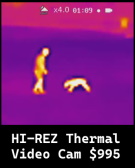
as nightvision scopes or thermal scopes. A sighting that is clear enough
and close enough to be unmistakeable.
Class A sightings are, by definition, less likely to be misinterpretations
than Class B sightings.
Class B sightings are those that occur in poor lighting conditions, or
at a distance, or very, very briefly.
Class B incidents are usually auditory (sound) incidents. They
might have a minor visual component, or they might have no visual
component.
The closest and most impressive encounters with bigfoots are usually Class
B incidents. These animals will sometimes approach people very closely
at night, in thick brush, or among big trees, where they clearly feel
more protected.
The human observers are often not within the brush when this happen, but
rather on dirt roads or hiking trails bordering thick brush and/or stands
of big trees.
One of the purposes of these expeditions is to show people how these
animals operate, so more people can help us identify other habitat areas.
At this stage, many previous expedition attendees have managed to encounter
more of these animals in other areas, after learning our techniques for
identifying habitat zones and provoking an encounter there.
Naturally, people who have never attended a BFRO expedition might wonder
whether this is all some kind a scam. Many new people come with the suspicion
that the whole thing might be a setup.
These approaches often reoccur in the same areas long after an expedition
is over and everyone has gone home. That's the best proof that these incidents
are not a setup.
Too much human pressure in a habitat area can push out these animals,
or drive them to more remote portions of a watershed. That's why we do
not publicly identify these areas. We want to keep the human pressure
to a minimum while learning as much as we can from a given habitat area.
An expedition with the BFRO is an opportunity to learn and see and hear
many things that cannot easily be seen, or heard or learned anywhere else.
You will meet the most active, most experienced, and most knowledgeable
bigfoot researchers in person, and in the field, as you can do nowhere
else.
You can learn through us in four days what would take you years to learn
on your own.
Testimonials from Previous Participants
Notes from Previous Expeditions
Bigfoot Research in a Nutshell
Special use permit limits and logistical considerations determine the maximum
number of people allowed on a given trip.
Some expeditions are limited to 15 people. Others may involve more than
50 people.
To sign up for a particular expedition you must contact the organizer for
that expedition. You should only contact an organizer if you have decided
that you want to attend, and you've read the Frequently Asked Questions
page (the Expedition FAQ). |
|
Before emailing any of the organizers about signing up
for their expeditions - please read the Registration
FAQ
Click the calendars for larger versions which show the email addresses
for the organizers of the expeditions.
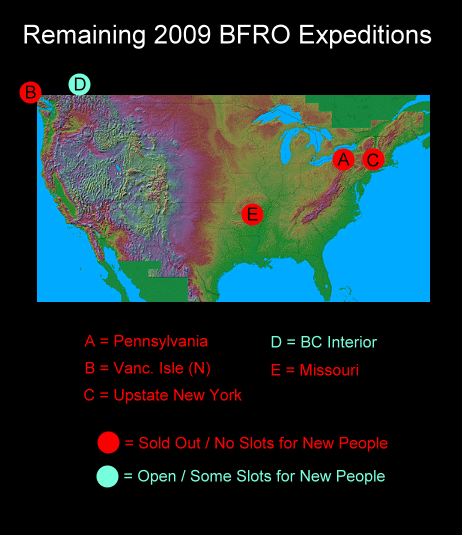
Expedition Schedule
(click icons below for contact info)
(keep scrolling down for more)


|